In modern commercial, industrial, and infrastructure construction, structural steel represents the backbone of modern engineering. Yet, when looking at a finished steel framework, few outside the fabrication industry realize that two distinct, highly specialized professional groups were required to make that building possible: Structural Engineers and Steel Detailers.
While both roles require extensive technical knowledge of physics, structural steel grades, building codes, and load distributions, their day-to-day deliverables, tools, and project milestones are vastly different. Understanding where an engineer's scope concludes and where a steel detailer's work takes command is essential for general contractors, fabricators, and architects aiming to avoid costly field rework and scheduling delays.
The Role of the Structural Engineer: Concept & Load Verification
A Structural Engineer of Record (EOR) is primarily responsible for the overall structural integrity and safety of the building. Licensed as Professional Engineers (PE) or Structural Engineers (SE), their duty is to ensure the structure can safely resist all dead loads, live loads, seismic forces, and wind pressures in strict compliance with international and local building codes (such as IBC and ASCE 7).
Key responsibilities of the Structural Engineer include:
- Structural Modeling & Sizing: Specifying the cross-sectional size, weight, and grade of primary members (e.g., W24x84 beams, HSS columns).
- Load Paths & Schematics: Determining how forces transfer through the roof trusses down to the foundation embedments.
- Contract Design Drawings (CDs): Producing structural 2D framing layouts, general notes, gridlines, and reaction tables for connections.
Crucial Distinction: Engineering drawings specify what must be built and what forces members must carry, but they do not contain the fabrication-ready dimensions, bolt hole patterns, or individual piece marks required for shop manufacturing.
The Role of the Steel Detailer: Millimeter Precision for the Shop Floor
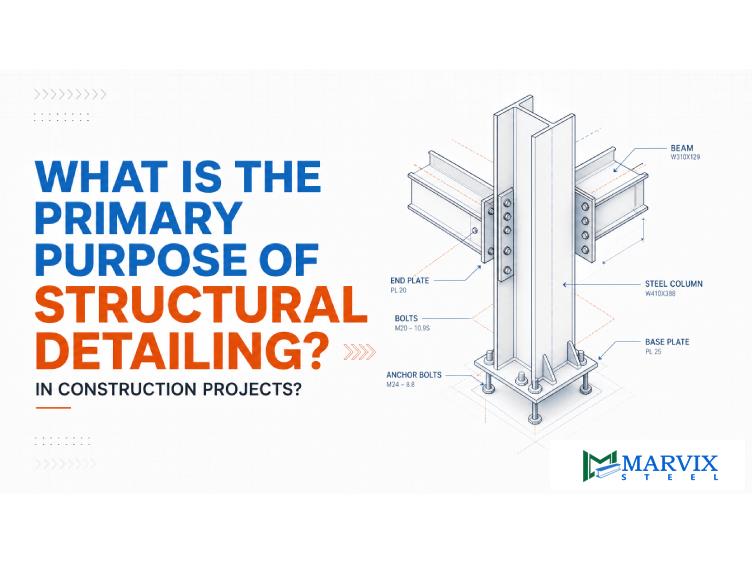
This is where Marvix Steel steps in. A steel detailer is a specialist who translates the engineer’s conceptual design drawings into exhaustive, millimeter-precise shop drawing packages and 3D fabrication models.
Without steel detailing, a steel fabricator cannot cut a single beam, drill a single bolt hole, or execute a single weld. The steel detailer determines the exact geometry of every single component—from a 40-foot main girder down to an individual clip angle, stiffener plate, and anchor bolt.
Key responsibilities of the Steel Detailer include:
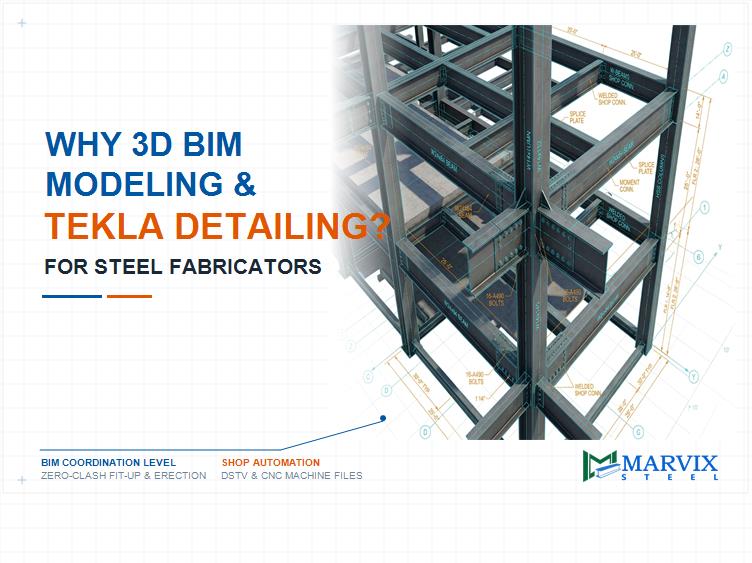
- Intelligent 3D Modeling: Building a clash-free digital twin of the entire structure in Tekla Structures or SDS/2.
- Shop Fabrication Drawings: Detailing individual piece drawings for shop fabricators, complete with weld symbols, cope cuts, and paint limits.
- Erection Plans (E-Sheets): Producing step-by-step assembly diagrams showing field crews where each piece mark belongs on the jobsite.
- Automated Machine Driving: Exporting DSTV, NC1, and DXF files directly into beam drills, plate cutters, and CNC machines.
Side-by-Side Comparison: Engineer vs. Detailer
| Factor | Structural Engineer (EOR) | Steel Detailer (Marvix Steel) |
|---|---|---|
| Primary Goal | Ensure building safety, stability, and load capacity | Produce shop-ready drawings for fabrication & erection |
| Deliverables | Contract drawings, structural specs, reaction tables | Shop assembly drawings, erection plans, CNC machine files |
| Level of Detail | Schematic framing and member designations | Every hole, bevel, bolt, gusset plate, and weld callout |
| Core Tools | RISA, ETABS, SAP2000, STAAD.Pro | Tekla Structures, SDS/2, Advance Steel, Revit |
| Standards | AISC 360, IBC, ASCE 7, Local Building Codes | AISC Code of Standard Practice, AISC 325, CISC, OSHA |
| Shop Integration | None (High-level design intent only) | Direct DSTV, NC1, KSS, and MRP/MIS shop integrations |
How Collaboration Eliminates Costly Field Torch Work
In modern fast-track construction, the handoff between structural engineer and steel detailer is where profitability is either secured or lost. When detailers identify discrepancies in contract drawings early—such as unworkable connection clearances or missing member reactions—proactive RFIs (Requests for Information) are submitted before steel arrives at the jobsite.
At Marvix Steel, our team of seasoned detailers, modelers, and senior checkers operates in continuous alignment with client specifications and AISC standards. With our 5-tier quality audit process, we guarantee zero-clash shop fit-up, virtually eliminating costly jobsite torch modifications and back charges.